
Draft · Vehicle Scanning
See what is in your blind spot.
A small add-on for cars that do not have blind-spot warning: two radars in the rear corners watch the lanes beside and behind you, and a small screen shows what they see.
The idea.
Most drivers know the moment: you start to change lanes and a car you never saw is right beside you. Newer cars can warn about it, but many cars on the road cannot. A phone alone cannot help: its GPS cannot see the cars around you.
So the device carries its own eyes: two corner radars of the kind carmakers use, working on their own with no help from other cars. A lamp on each side turns amber when a lane is taken and red when you signal towards it. Later, cars that carry the device could share their positions to show traffic further away.
The simulator.
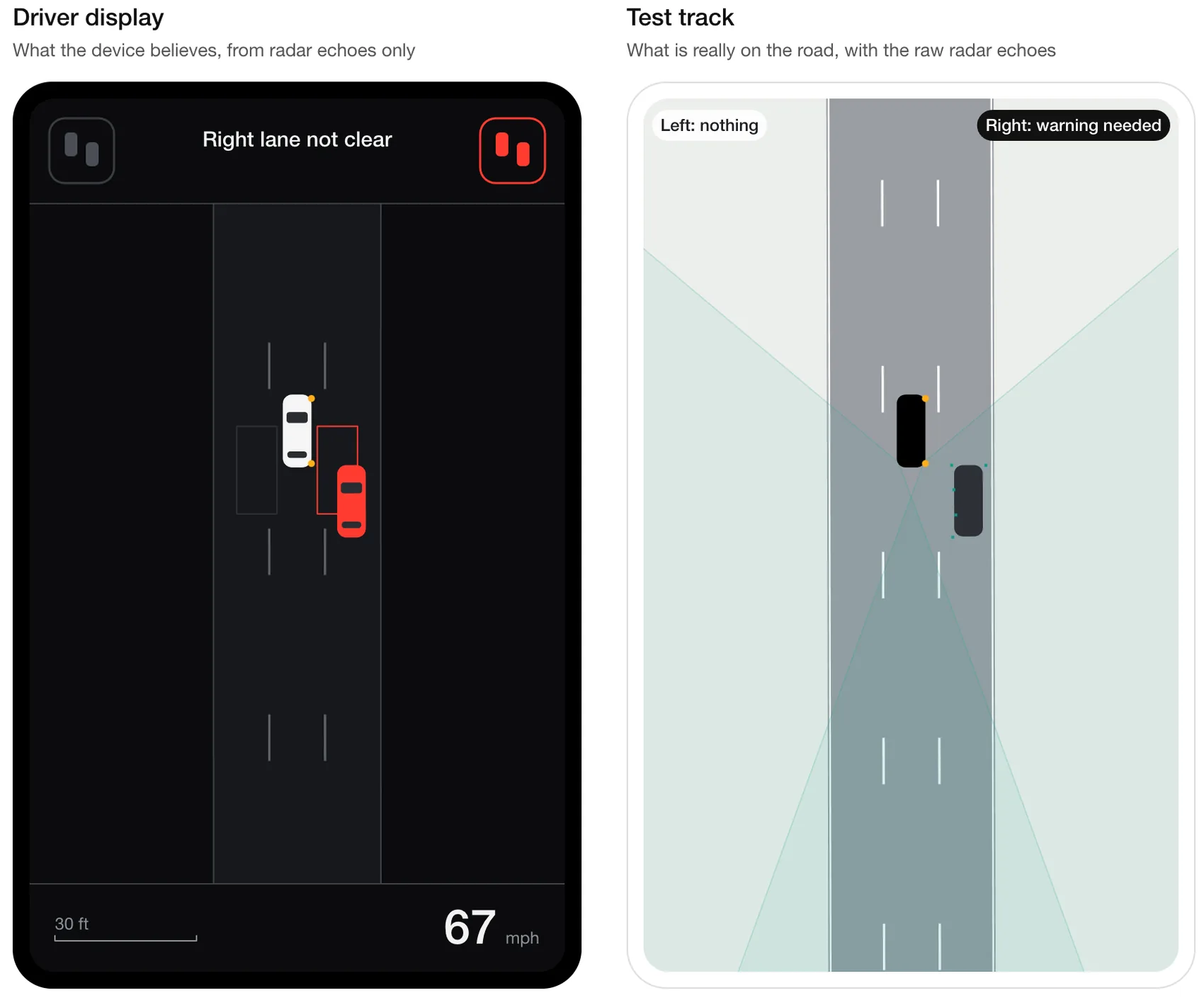
Before buying any hardware, the traffic, the radar echoes and their errors are simulated, so the warning logic can be designed and measured. On the left is what the driver sees; on the right, what is really there.
You signal right with a car hidden there: the right lamp turns red. Left: the driver's display. Right: what is really on the road. 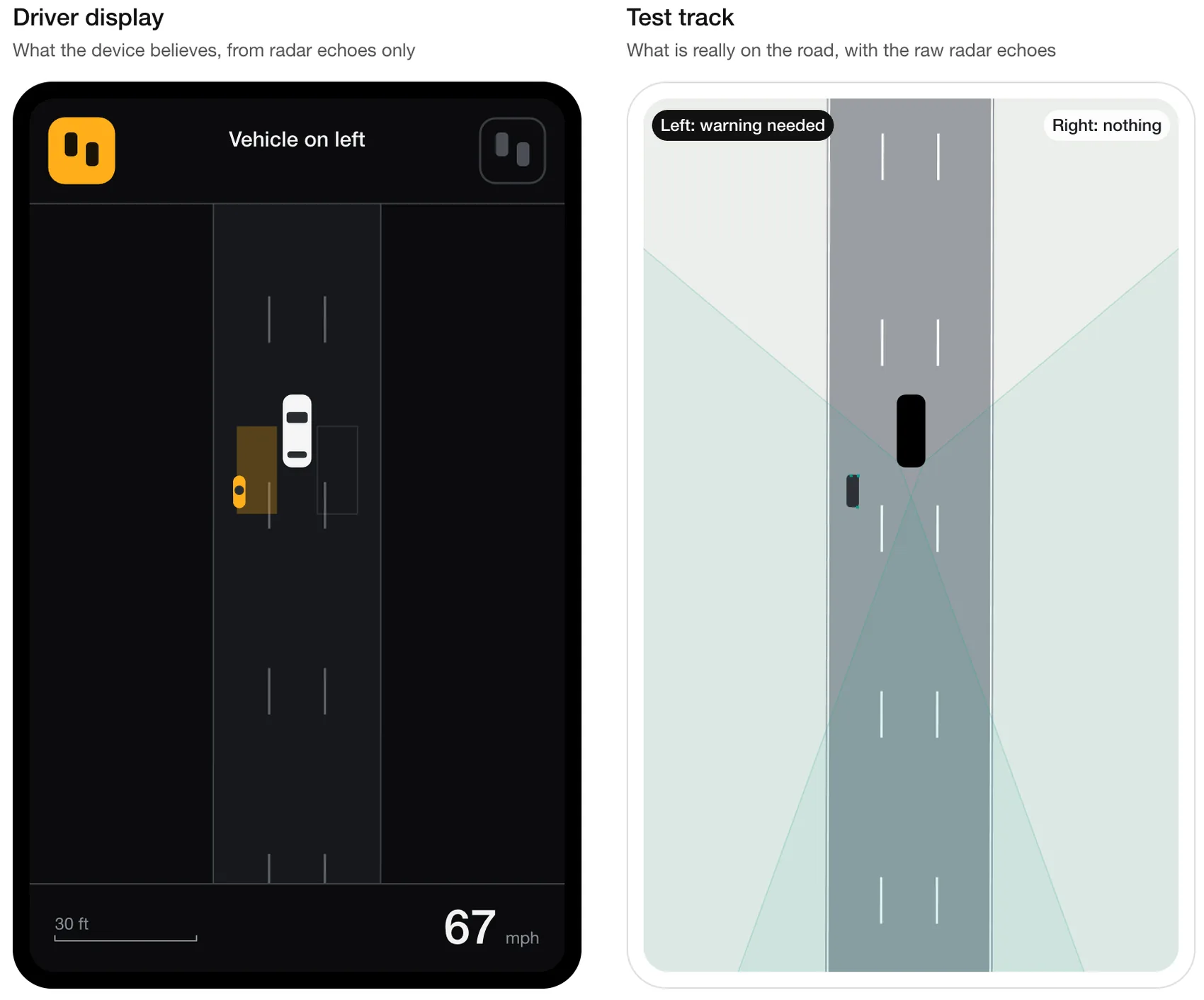
A motorcycle sits in your left blind spot. Left: the driver's display. Right: what is really on the road. 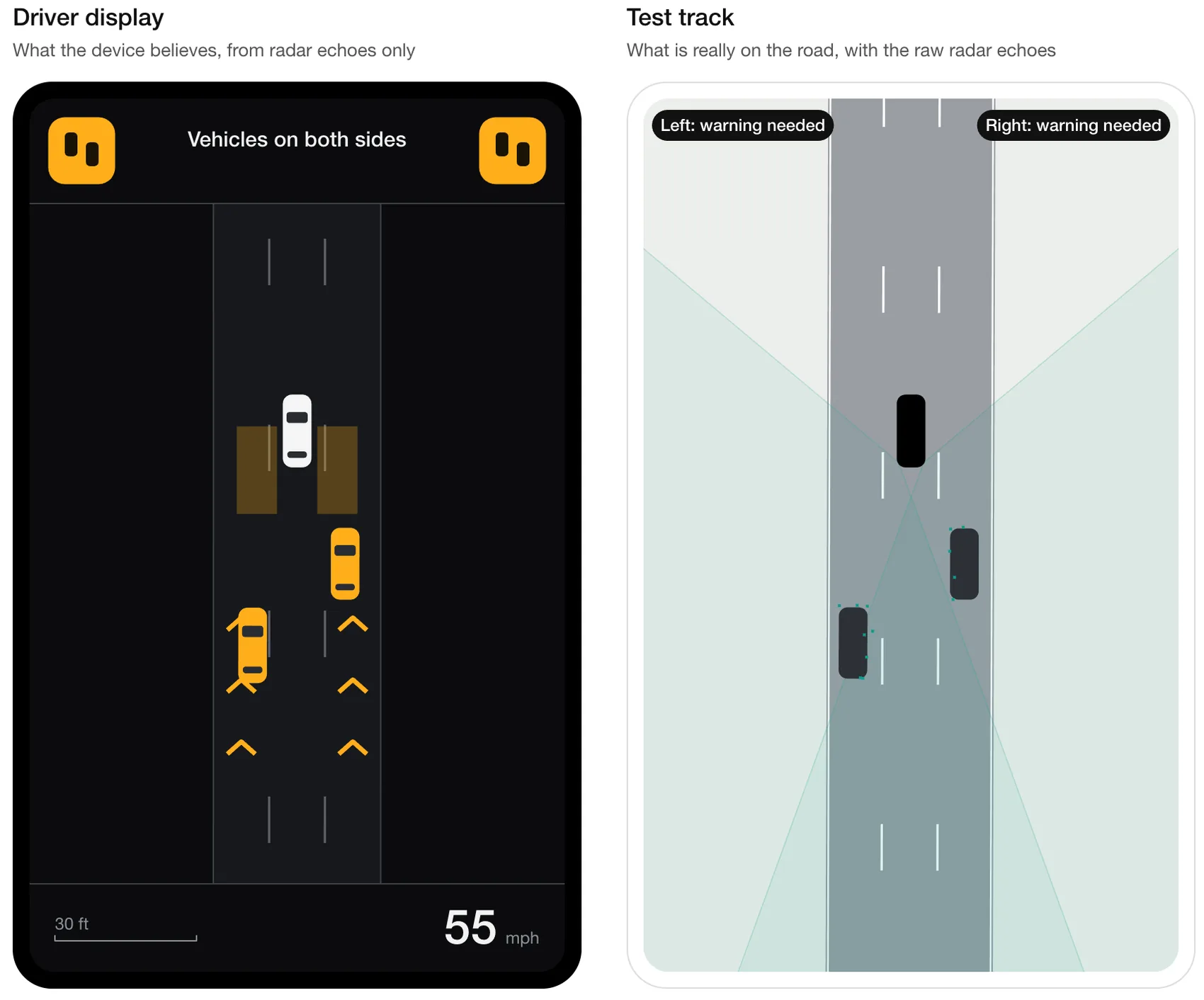
Busy traffic, with cars on both sides. Left: the driver's display. Right: what is really on the road. 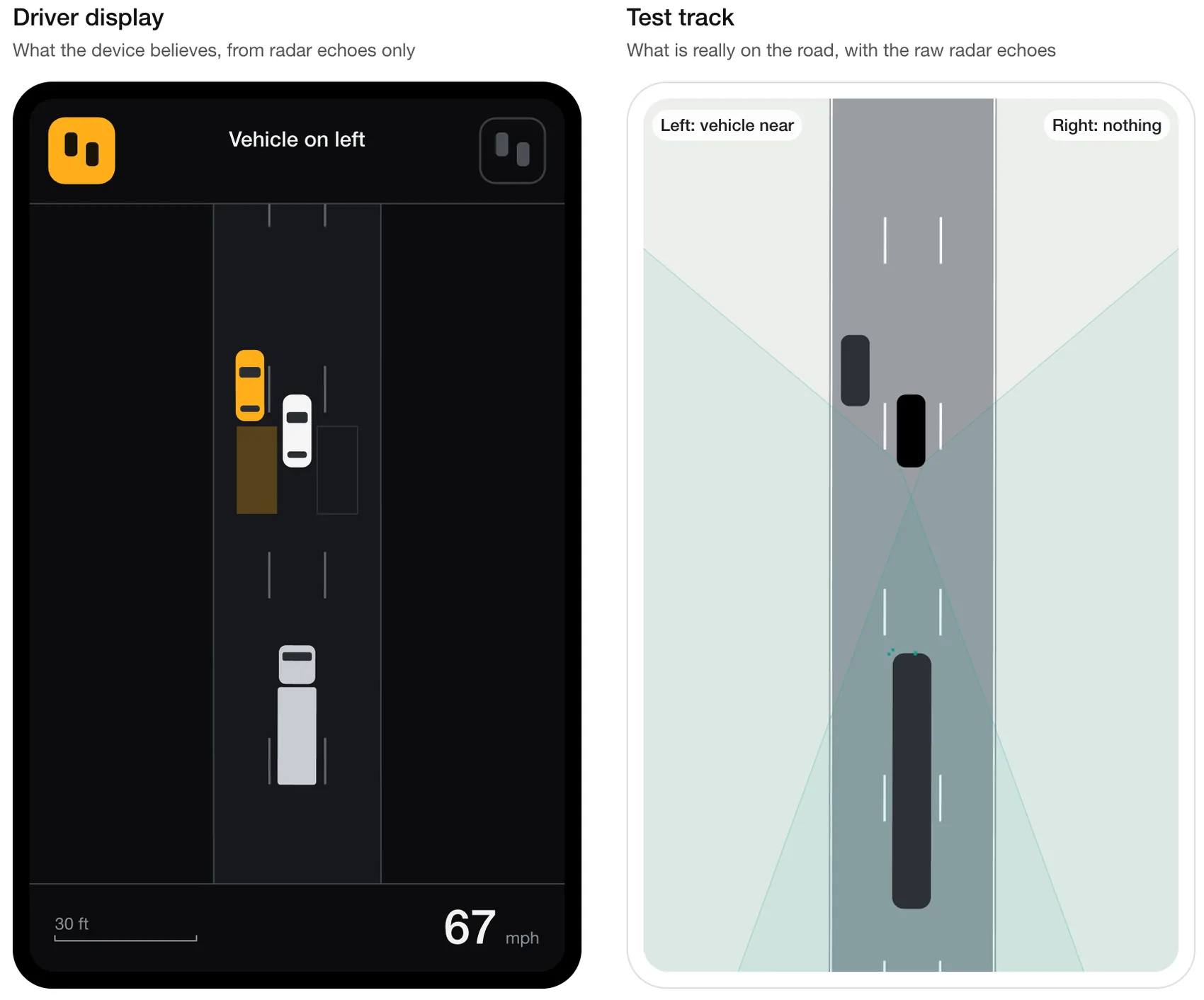
A truck behind you, and a car alongside on the left. Left: the driver's display. Right: what is really on the road. 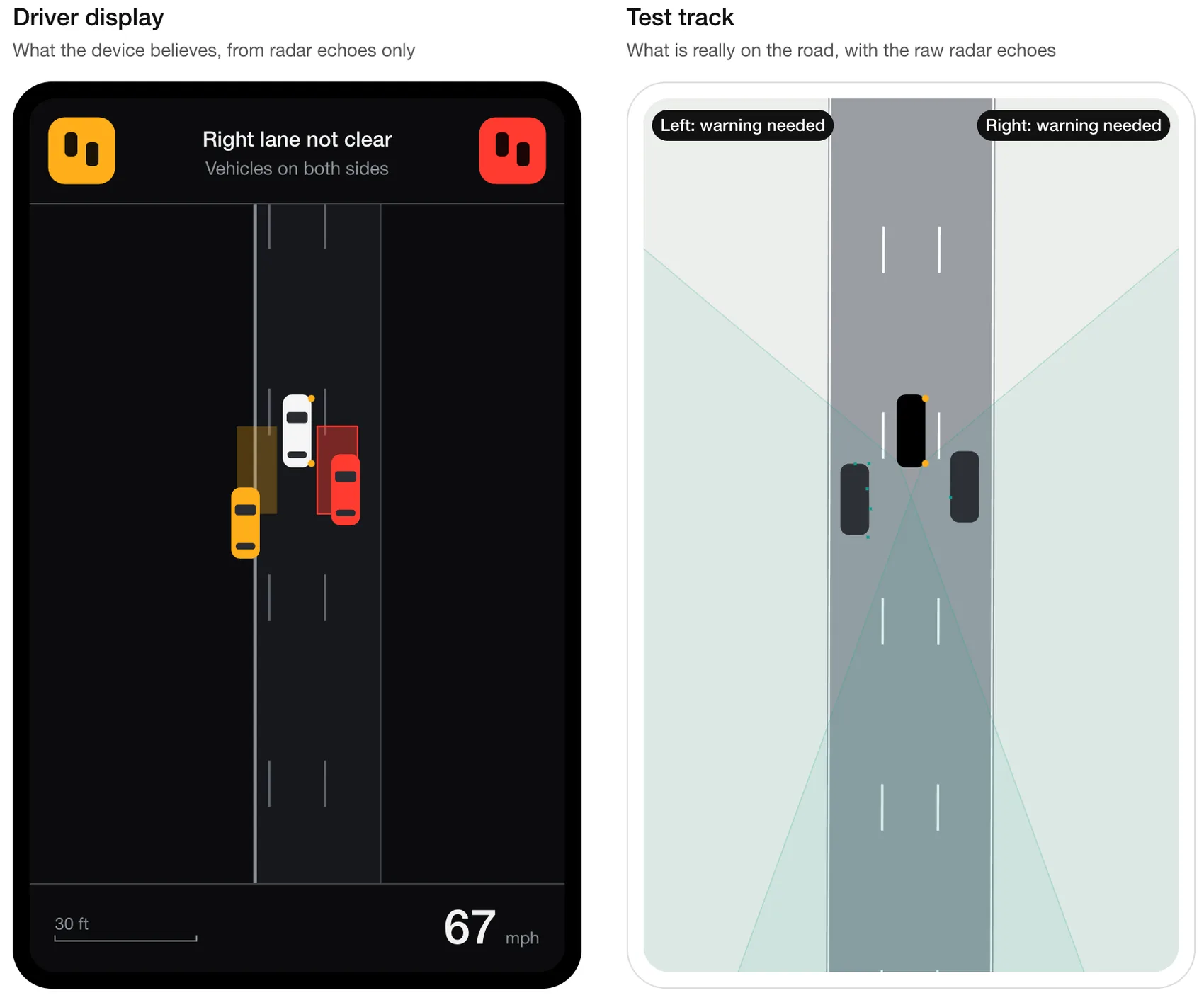
Boxed in on both sides while signalling right. Left: the driver's display. Right: what is really on the road.
Where it stands.
Step 1 of 4 is done: a simulator with 33 driving situations, from a car settling in your blind spot to a concrete wall that mirrors the car behind. The chosen design passes all 33 in the simulator, run 20 times each. Those numbers come from a simulated radar, not a real one.
Step 2: a roadside test with one radar development kit and a laptop, filmed so the radar can be checked against video.
Step 3: two radars on a real car, feeding a small screen.
Step 4: position sharing between cars.
Thoughts on this draft?
Engineers, mechanics and drivers are welcome to weigh in.